The Complete Guide to Large Language Model Optimization (LLMO)

Artificial intelligence is no longer a buzzword reserved for research labs and Silicon Valley boardrooms. Thanks to Large Language Models, it is now a practical tool available to anyone with an internet connection - students, marketers, developers, and business owners alike.
But with dozens of platforms, conflicting claims, and a rapidly evolving landscape, it can be genuinely difficult to know where to start. This guide cuts through the noise. By the time you finish reading, you will understand exactly what LLMs are, how they work, how the major models compare, and most importantly, how to make them useful in your own life or work.

Key Takeaways:
- You will understand how AI search works and how it decides which brands to recommend.
- You will learn how to make your content discoverable, trustworthy, and usable by AI systems.
- Visibility now depends on being included in AI answers, not just ranking on search engines.
- Strong content depth, structure, and trust signals directly increase your chances of being cited.
- Results build over time, with early traction typically visible within 60 to 90 days.
What Is a Large Language Model?
A Large Language Model (LLM) is a type of artificial intelligence system trained on enormous quantities of text - books, websites, academic papers, code repositories, and more. Through this training process, the model learns statistical patterns in language, which it then uses to understand questions and generate coherent, contextually relevant responses.
An LLM is an AI trained on large amounts of text to generate human-like language. It doesn’t
truly think, but it can convincingly mimic patterns of human thought.The "large" in the name refers to two things: the scale of the training data (often hundreds of billions of words) and the number of parameters in the model (the internal variables the model adjusts during training to improve its predictions). GPT-4, for example, is estimated to have over one trillion parameters.
This includes:
- Providing clear and direct answers to specific questions
- Covering topics in depth so the context is complete
- Using structured formatting that is easy to extract and reuse
- Building trust through accurate, consistent, and verifiable information
LLMO is not just about visibility. It is about becoming a trusted source that AI systems rely on when generating answers.
What can an LLM actually do?
Large Language Models (LLMs) are versatile AI systems designed to understand and generate human-like language, making them powerful tools for a wide range of everyday and professional tasks.
✍️
Write & Edit
Draft emails, blog posts, reports, scripts, or any long-form content. Edit for tone, clarity, and grammar.
🧑💻
Write code
Generate, debug, explain,
and refactor code across dozens of programming languages.
📋
Summarize & analyse
Condense lengthy documents, extract
key insights, and answer specific questions about uploaded text.
🌐
Translate languages
Accurately translate between dozens of languages, preserving tone and cultural nuance.
🔎
Research & reason
Break down complex topics, compare perspectives, and walk through multi-step reasoning chains.
🤝
Roleplay & assist
Act as a tutor, brainstorming partner, interviewer, customer service agent, or creative collaborator.
From communication and coding to analysis and creativity, LLMs extend human capability - helping you work faster, think deeper, and create more effectively.
Why LLMO Matters Right Now
The way people discover information online is changing rapidly, and AI driven search is at the center of that shift. Users are no longer just browsing links. They are relying on AI systems to give direct, trusted answers.
- Higher Conversion Rates
AI search visitors convert at 4.4 times higher rates than traditional organic search visitors, according to Semrush 2025. Users coming from AI typically have stronger intent and are closer to making decisions. - Massive Shift in User Attention
Platforms like ChatGPT process billions of prompts daily and serve hundreds of millions of users every week. This indicates a clear shift in where people are spending their time and how they search for information. - Declining Click Through Rates
Click through rates on traditional search results are dropping. Research shows a decline of over 30 percent after the introduction of AI generated answers, even for top ranking pages. - AI as a Core Growth Channel
AI driven traffic is expected to generate business value comparable to traditional search by 2027. This is no longer an emerging channel. It is becoming a primary source of traffic and conversions. - Compounding Advantage for Early Movers
Brands that are cited by AI today build long term visibility. As AI systems learn from existing content and patterns, early mentions increase the likelihood of future recommendations.
This is not a future trend. It is a present shift that is already changing how users discover and choose brands.
How LLMs Actually Find and Use Your Content
AI systems do not discover your content in just one way. They rely on two distinct pathways, and both play a critical role in whether your brand appears in AI generated answers.
Pathway 1: Training Data
AI models are trained on large volumes of text collected from across the web. If your brand appears consistently in credible, well known, and widely cited sources, the model builds a stronger understanding of who you are and what you represent.
This process happens over long cycles and cannot be influenced instantly. However, you can strengthen your presence over time by focusing on:

- Getting mentioned on authoritative and widely cited websites
- Publishing consistent, high quality content in your niche
- Building a strong and recognizable brand presence across platforms
- Earning backlinks and references from credible sources
Long-term visibility comes from building authority, consistency, and recognition across the web.
Pathway 2: Real Time Retrieval
Modern AI systems also rely on real time data. They search the web at the moment a query is asked and pull in relevant, up to date content to generate responses.
This is the fastest way to influence AI visibility. To improve your chances of being selected, your content should:

- Directly answer specific user questions
- Be well structured with clear headings and sections
- Load quickly and be technically optimized
- Be easy for search engines to crawl and index
Real time retrieval is heavily influenced by traditional SEO. Strong rankings, clean site structure, and clear content directly increase your chances of being included in AI responses. This is why LLMO and SEO should work together, not as separate strategies.
LLMO vs SEO vs GEO vs AEO What’s the Difference
These terms are often used interchangeably, but they solve different parts of the same problem, how your brand gets discovered and recommended.
| Aspect | SEO | AEO | GEO | LLMO |
|---|---|---|---|---|
| What It Focuses On | Search engine visibility | Direct answers in search | Visibility across AI platforms | AI understanding and trust |
| How It Works | Ranks pages based on relevance, authority, and technical signals | Extracts concise answers from pages for quick responses | Positions content to be included in AI generated outputs | Helps AI systems interpret, evaluate, and select content |
| What You Optimize | Keywords, backlinks, site structure, technical SEO | Question answer format, structured content, FAQ sections | Broad AI platform presence, entity signals, content coverage | Semantic depth, structured formatting, trust signals, authority |
| Typical Output | Blue link search results | Featured snippets, answer boxes | Mentions in AI generated responses | Trusted citations inside AI answers |
| How Success Is Measured | Rankings, clicks, organic traffic | Snippet visibility, answer impressions | Brand presence across AI tools | Frequency, accuracy, and consistency of AI mentions |
These strategies are not separate. They build on each other.
- SEO gets your content discovered.
- AEO improves how your content is extracted for direct answers.
- GEO expands your visibility across AI platforms.
- LLMO ensures your content is understood, trusted, and consistently used by AI systems.
The strongest strategy is to use SEO as the foundation and layer LLMO on top, so your brand appears both in search results and inside AI generated answers.
The 5 Pillars of LLMO Your Complete Framework
LLMO is not a single tactic. It is a system built on five core pillars that determine whether AI systems understand, trust, and use your content.
Pillar 1: Semantic Content Depth
AI systems do not just read keywords. They interpret meaning and context. Your content needs to fully cover a topic so nothing important is missing.
To build semantic depth:
- Answer specific questions clearly and directly
- Cover related subtopics and follow up questions
- Use natural language variations instead of repeating the same phrases
- Start sections with a clear summary before expanding
Without sufficient depth and clarity, your content may be indexed, but it will not be understood or used by AI systems.d to it.
Pillar 2: Topical Authority
AI systems evaluate how deeply you cover a subject, not just how well one page is written. A single article is not enough. You need a connected body of content.
To build topical authority:
- Create pillar pages supported by related articles
- Focus on one niche before expanding into others
- Interlink related content strategically
- Keep content updated and relevant over time
Pillar 3: Trust Signals and E E A T
AI systems prioritize information that is accurate, credible, and verifiable. Trust determines whether your content gets used or ignored.
To strengthen trust signals:
- Publish content under real, identifiable authors
- Cite reliable sources and data
- Maintain a clear and consistent brand presence
- Collect reviews and mentions on external platforms
- Implement structured data such as Article, FAQ, and Organization schema
Pillar 4: AI Friendly Content Formatting
Even high quality content can be ignored if it is not easy to extract. Structure plays a critical role in how AI systems use your content.
To improve formatting:
- Use clear and descriptive headings that reflect the question being answered
- Open each section with a direct answer before adding detail
- Use tables and comparisons where relevant
- Include a dedicated FAQ section
- Add a TLDR or Key Takeaways section near the top
- Ensure content is clean, well organized, and easy to scan
Pillar 5: Off Site Brand Presence
AI systems learn about your brand from across the web, not just your website. External validation strengthens your authority.
To build off site presence:
- Get featured on high authority publications in your industry
- Maintain accurate profiles on major platforms and directories
- Ensure consistent brand information across all listings
- Work toward establishing a strong brand entity presence
- Stay active in relevant communities and industry platforms
Together, these five pillars determine whether your content is simply published or actually used by AI systems.
Top LLM Platforms Compared (2025)
The LLM market has matured significantly. Rather than one dominant model, there is now a diverse ecosystem of options, each with genuine strengths. Here is how the major platforms compare as of 2025.
| Platform | Best for | Context window | Free tier | Ideal user |
|---|---|---|---|---|
| ChatGPT (OpenAI) GPT-4o | General purpose, image input, plugins | 128K tokens | Yes (GPT-3.5) | Everyday users, businesses |
| Claude (Anthropic) Claude 3 | Long documents, nuanced writing, safety | 200K tokens | Yes | Researchers, writers, legal/finance |
| Gemini (Google) Ultra/Pro | Google Workspace integration, multimodal | 1M tokens (Ultra) | Yes | Google users, enterprise teams |
| Mistral Open | Efficient, multilingual, open weights | 32K tokens | API free tier | Developers, EU-based businesses |
| LLaMA 3 (Meta) Open Source | Local/self-hosted, privacy, customisation | 8K–128K tokens | Fully free | Developers, privacy-conscious users |
| Copilot (Microsoft) GPT-4 | Office 365 integration, enterprise search | 128K tokens | Yes (Bing) | Microsoft 365 users |
✅ What LLMs do well
- First drafts of almost any written content
- Explaining complex topics simply
- Generating and debugging code
- Summarising long documents rapidly
- Brainstorming and ideation
- Translating and localising content
⚠️ Where LLMs fall short
- Real-time information (knowledge cutoffs)
- Precise arithmetic and calculations
- Consistently accurate citations
- Nuanced cultural or regional context
- Tasks requiring physical-world verification
- Replacing genuine human expert judgment
The best LLM isn’t universal, it depends on your use case, workflow, and priorities, making platform selection a strategic choice rather than a default decision.
Your LLMO Audit Checklist
Use this checklist to evaluate whether your content is optimized for AI visibility, trust, and extraction.
1. Content Quality
- Does each page start with a clear and direct answer to the main question
- Are headings specific and aligned with what each section actually answers
- Is there a summary or TLDR section for long form content
- Is the content free from filler, repetition, and keyword stuffing
- Does the content fully cover the topic, including related and follow up questions
2. Technical and Structural
- Is structured data implemented, including Article, FAQ, HowTo, and Organization schema
- Do important pages include a dedicated FAQ section
- Is the site fast, mobile friendly, and properly indexed
- Have you implemented or considered an llm.txt file
- Are internal links connecting related content in a logical way
3. Trust and Authority
- Are articles published under real authors with credible profiles
- Are claims supported with reliable sources and references
- Is your About page complete and verifiable
- Does your brand have consistent profiles across major platforms
- Are there external mentions, reviews, or citations from trusted sources
4. Off Site Presence
- Is your brand listed accurately on relevant directories and platforms
- Do you have a recognizable and consistent brand presence across the web
- Are you mentioned on high authority third party websites
- Is there user generated content such as reviews on external platforms
If you cannot confidently say yes to most of these points, your content is unlikely to be consistently picked up or trusted by AI systems.
Your 30/60/90-Day LLM Learning Timeline
LLMO is not an instant result strategy. It builds in phases, and each stage has a clear focus. This timeline shows what to prioritize and what to expect as your efforts start compounding.
Days 1 to 30 Foundation
This is the setup phase where you fix gaps and prepare your content for AI visibility. Focus on:
- Auditing existing content and identifying pages that need restructuring
- Rewriting key pages to include clear, direct answers
- Implementing structured data such as Article and FAQ schema
- Fixing technical issues like site speed, indexing, and mobile usability
- Setting up author profiles and strengthening trust signals
- Defining your topic clusters and content structure
At this stage, the goal is to build a strong foundation rather than expect immediate results.
Days 31 to 60 Building
Your optimized content starts getting indexed and picked up by search engines and AI systems. Focus on:
- Publishing high quality pillar content and supporting articles
- Expanding FAQ coverage across key pages
- Strengthening internal linking between related content
- Starting digital PR and earning third party mentions
- Improving content depth and topical coverage
You may begin to see early visibility, especially on platforms that respond quickly to fresh and well structured content.
Days 61 to 90 Traction
This is where consistent signals begin to translate into measurable results. Focus on:
- Monitoring AI mentions across different platforms
- Tracking growth in branded and direct traffic
- Expanding topic clusters based on performance
- Updating and improving existing content
- Reinforcing authority through continued off site efforts
At this stage, you should start seeing clear signs of traction as your content becomes more visible and trusted by AI systems.
LLMO compounds over time. The work you do in the first 90 days builds the foundation for long term visibility and sustained growth.
How to Measure LLMO Performance
Measuring LLMO requires a shift in mindset. You are not just tracking rankings or clicks. You are tracking visibility inside AI responses and the downstream impact on your brand.
Here are the key signals that indicate whether your LLMO efforts are working:
- Are AI platforms mentioning your brand
Search your target queries on ChatGPT, Perplexity, Gemini, and Google AI Overviews. Look for whether your brand appears in the response, how frequently it shows up, and how it is positioned. This is the most direct indicator of success. - Is branded search demand increasing
Check Google Search Console for growth in branded queries. When users discover your brand through AI, they often search for it separately. Rising branded impressions and clicks are a strong signal that AI visibility is driving interest. - Are you seeing unexplained direct traffic growth
AI recommendations often lead to users visiting your site directly rather than through a tracked link. If your direct traffic is increasing without a clear source, AI visibility may be a contributing factor. - Are AI platforms sending referral traffic
Some platforms pass referral data. Monitor traffic from sources like Perplexity or ChatGPT and evaluate how those users behave. Look at engagement and conversion patterns to understand the quality of this traffic. - Is your brand being mentioned across the web
Use monitoring tools to track mentions on websites, forums, and emerging AI visibility platforms. The more your brand appears in credible places, the more likely it is to be picked up and reused by AI systems.
In LLMO, success is not defined by where you rank. It is defined by whether your brand shows up, gets trusted, and influences decisions inside AI generated answers.
Essential Resources for Going Deeper
The LLM space moves faster than any printed resource can keep up with, but these starting points remain reliable:
📖
Attention Is All You Need
The original 2017 Google paper that introduced the
transformer architecture. Dense, but foundational for anyone who wants to understand the technical basis of LLMs.
🎓
fast.ai Practical Deep Learning
A free, code-first course for practitioners. Excellent for developers who want hands-on experience building and fine-tuning models for real-world applications.
📝
Andrej Karpathy's Neural Networks series
A YouTube series from a former Tesla and OpenAI researcher. Builds up from scratch in an unusually clear
and practical way.
🔬
Hugging Face documentation
The de facto hub for open-source models. Their
documentation covers everything from model cards to deployment. Excellent for developers.
The tools will evolve, but mastering these fundamentals ensures you can adapt, build, and stay relevant as the LLM ecosystem continues to shift.
Common LLMO Mistakes to Avoid
Most LLMO efforts fail not because of lack of effort, but because of incorrect assumptions. Avoiding these mistakes can save months of wasted work.
- Focusing only on your own website. AI systems learn about your brand from across the web, not just your site. If you are not building visibility on external platforms, your impact will be limited.
- Separating LLMO from SEO. LLMO is not a replacement for SEO. It builds on it. Strong search visibility directly improves your chances of being selected in AI responses.
- Writing for keywords instead of meaning. Keyword stuffing does not work for AI systems. They prioritize clarity, context, and relevance. Content needs to answer questions, not repeat phrases.
- Expecting immediate results. Training based influence takes time. If you want faster impact, focus on real time retrieval through well structured, discoverable content.
- Ignoring how your brand is represented. AI systems can reflect both positive and negative information. If your brand is misrepresented, you need to correct it through accurate content and credible third party mentions.
- Overlooking technical fundamentals. Even for AI visibility, technical SEO still matters. If your site is slow, poorly structured, or hard to crawl, your content is less likely to be retrieved and used.
Avoiding these mistakes is often more important than adding new tactics. Clean execution of the basics is what drives consistent LLMO results.
Frequently Asked Questions
No. LLMO builds on top of SEO. Strong SEO improves your chances of being discovered and retrieved, while LLMO ensures your content is understood and used by AI systems.
Early improvements from real time retrieval can appear within 30 to 60 days. Long term influence through training data can take several months.
Yes. AI systems prioritize content quality, clarity, and completeness. A well structured page from a smaller brand can outperform weaker content from larger sites.
Begin with a content audit. Improve your existing pages by adding clear answers, better structure, and FAQ sections. This delivers faster results than creating new content from scratch.
It is a file that helps signal which parts of your content are most important for AI systems. It works similarly to robots.txt and is becoming a useful addition for AI optimization.
SEO focuses on ranking in search results. LLMO focuses on being included in AI generated answers. The goal shifts from visibility in listings to visibility within responses.
Yes. Backlinks remain a strong signal of authority and credibility. They also increase the likelihood of your content being trusted and referenced by AI systems.
You can test this by searching relevant queries on AI platforms and tracking brand mentions. Growth in branded traffic and direct visits is also a strong indicator.
Final Thought
AI is not just changing search. It is changing how decisions are made.
Ranking on Google is no longer the finish line. The real goal is to be included in the answers people trust.
The brands that win will not be the ones with the most content, but the ones with the clearest, most structured, and most credible content.
Start with what you already have. Improve it. Expand it. Make it easier for AI systems to understand and use.
Because in the near future, visibility will not be about being found. It will be about being chosen.
Share This Post
RELATED RESOURCES
Checkout Our Latest Articles & News Updates

 Anish P.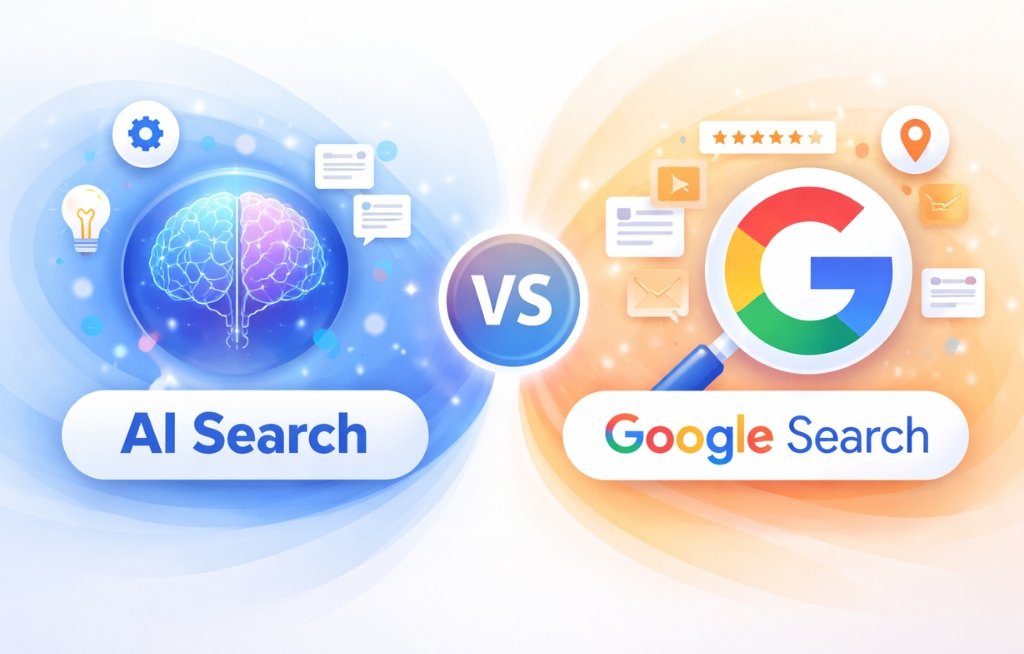

 Sam M.
We, as a digital marketing agency, offer a complete package of web design, development, and online marketing services to help you achieve your business goals. At VerifiedCliq Solutions, we offer exceptional SEO services that utilize cutting-edge strategies to optimize your website both on and off the site, ensuring remarkable results.
©2021-2026 VerifiedCliq Solutions. All Rights Reserved. Sitemap | Privacy Policy | Terms of Service